Sync & Media
What Music Supervisors Expect: Versions, Stems and Metadata
By the Starchild Music team · October 25, 2026 · 5 min read
The short answer
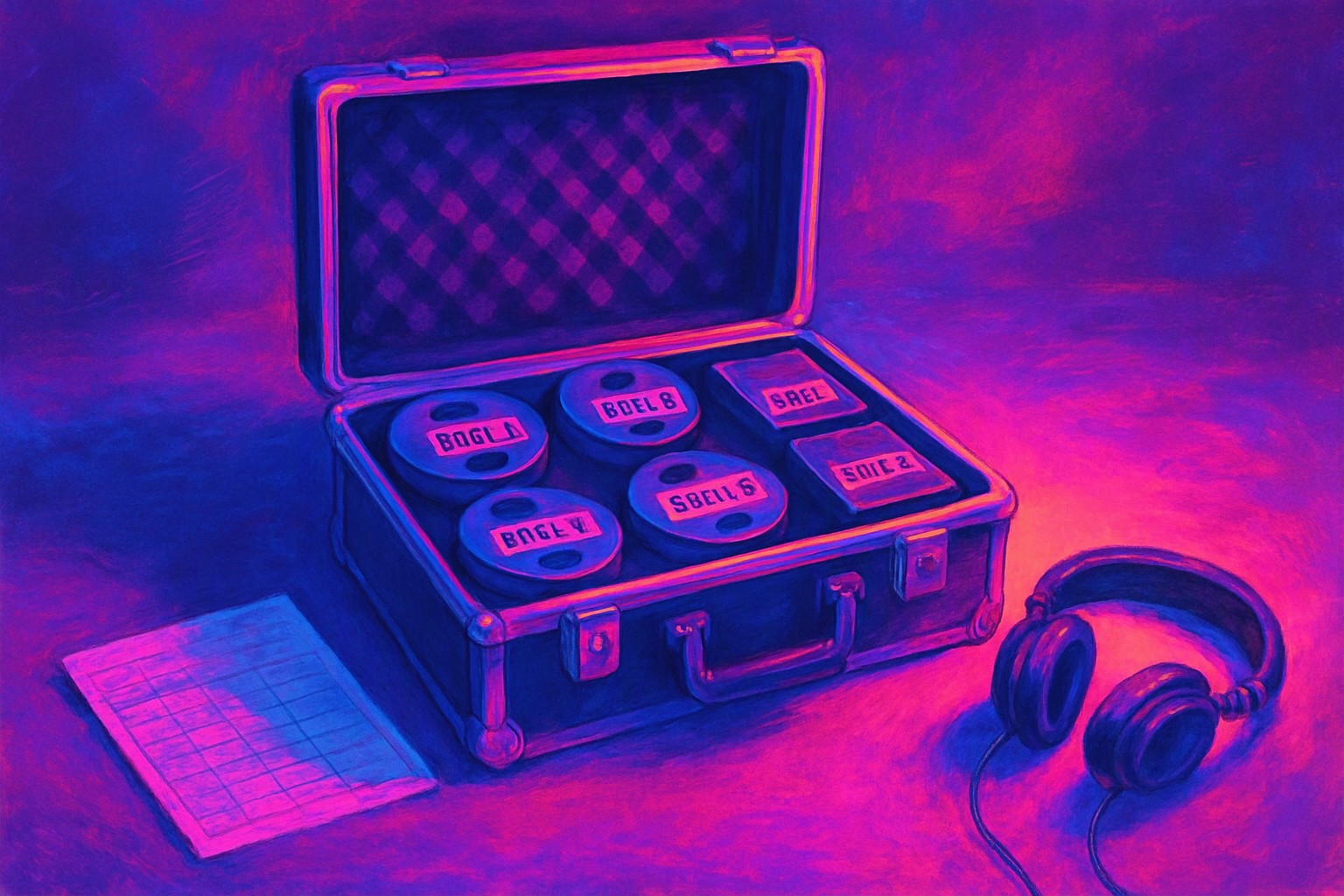
Supervisors expect a full mix, a true instrumental, stems and clean or edited versions, plus metadata that covers writers, owners, splits, lyrics, mood, tempo and identifiers. They work to tight briefs and cannot wait while you prepare files. Having everything ready before you pitch is often the difference between a shortlist and a missed chance.
A supervisor who loves your song will almost always ask for more files. If the answer is "give me a week," the moment has usually passed.
This guide lists what supervisors typically expect and how to have it ready before anyone asks.
Why readiness matters
Horus Music's guide on Hypebot calls sync a highly competitive process with tight deadlines. The article stresses that artists who offer instrumentals, stems, documentation and metadata improve their chances.
Berklee's licensing roundup makes a similar point. It says an artist focused on sync needs many versions of each song, including instrumentals, a cappella mixes and clean edits.
Being ready is a sign of professionalism. It tells a supervisor you will not slow the project down.
The versions to prepare
MN2S's guide to a sync-ready catalog says every track should have a full mix, a clean version if the original is explicit, a proper instrumental and stems. It stresses that an instrumental should be rebalanced so the arrangement still feels complete, not simply the vocal muted.
Why? Horus Music's guide notes supervisors need flexibility to move between vocal and instrumental versions so music sits under dialogue.
Shorter edits and cleaner versions help too, since scenes and ads rarely fit a full-length song exactly.
Stems, labeled well
Stems are separate audio files for each part of a mix. MN2S suggests breaking a track into drums, bass, guitars and keys, synths and pads, lead vocal, backing vocals and effects.
Name them consistently, for example TrackTitle_Stem_Drums.wav, so anyone who opens the folder knows what they have. Start every stem at the same point so they line up when dropped into an edit.
MN2S also recommends exporting at the broadcast standard of 48 kHz and 24-bit WAV, since MP3 files are not suitable for film or broadcast use.
Metadata that gets you found
Supervisors search by feel. MN2S advises tagging with genre (up to three), mood, instrumentation, vocal type and tempo, focusing on descriptions that really fit the track instead of scattershot keywords.
Hypebot's guide adds complete, accurate lyrics, since sync briefs often specify lyrical themes, with translations for foreign-language songs.
Identifiers matter as well. Keep a spreadsheet with title, artist, composer, publisher, PRO affiliation, ISWC and ISRC, as MN2S suggests. Our metadata checklist goes deeper.
Paperwork that protects the deal
Both Hypebot and MN2S say to document splits and clear samples before pitching. The Hypebot guide specifically recommends split sheets showing each collaborator's share and a clear record of who owns the master.
MN2S warns that uncleared samples risk distributor flags and revenue redirection, not just a lost placement.
This ties back to one-stop and pre-cleared music. The cleaner your paper, the faster a yes can happen.
A simple pitch folder
Put everything for each song in one folder, ready to send.
- Full mix, instrumental and any short edits.
- Labeled stems that start at the same point.
- A one-page data sheet: writers, percentages, PRO, IPI, publisher, ISRC and ISWC.
- Lyrics, mood, tempo and key tags.
- Split sheet and master ownership note.
Where Starchild fits
On Starchild, every license includes a certificate naming the writers with their PRO and IPI, and songs can be heard in several production styles with key and tempo controls. Stems are available on songs that offer them. Adaptive sync licensing for film, TV, games and ads is coming this fall.
If you are a supervisor, start at /license/music-supervisors. If you are a writer, see /sell-songs.
Common mistakes
Most rejected submissions fail on small things. The instrumental has a different mix level than the full song. Stems are exported with different start points and will not line up. The title in the file name differs from the title in the data sheet.
Another frequent problem is vague tagging. A track tagged with fifteen genres is harder to find than one with three accurate ones, a point MN2S makes directly.
Fix these once, in a template, and every future song benefits.
Build it into every release
MN2S recommends building sync folders into the end of every release, instead of treating the work as something to do when an opportunity appears. That habit is the real lesson.
If your files are ready the day a song is finished, you never have to rush when a supervisor writes back. You can simply send the folder.
How this helps even without a placement
Preparing these files is useful far beyond sync. Instrumentals can serve podcasts or video creators, stems let others remix or adapt your work, and clean metadata makes your catalog easier to search anywhere.
It also forces you to look at each song as a finished product with a clear owner and a clear description. That discipline tends to improve how you release music in general.
Treat it as an investment in your catalog, not a chore for one pitch.
A quick self-check
Pick one song and pretend a supervisor wrote to you in an hour. Could you send a full mix, an instrumental, stems and a data sheet without opening a single session file?
If the answer is no, that is your to-do list. Do one song a week and in two months your whole catalog is ready.
Writers who do this rarely lose a chance to a slow reply. They also find that the process teaches them what is missing from their own records, which is worth knowing before anyone else asks.