Adaptive Music
Music That Knows the Room
By the Starchild Music team · October 5, 2026 · 8 min read
The short answer
The most interesting music of the next decade may never be 'played' at all — it will respond. Adaptive audio already scores a billion hours of gameplay, EEG-validated soundscapes outperform focus playlists in peer-reviewed research, and the format is moving from headphones into rooms: retail, fitness, hospitality, and installations where sound follows the state of the space and the people in it. The missing layer has been songs — human-written music that adapts without losing authorship.
There's a version of music's future that has nothing to do with playlists, and it's already here in pieces. In games, music has been adaptive for decades: scores that intensify as the boss closes in, layers that bloom when you cross into new territory — arrangement decided in real time by the state of the world. In wellness, generative soundscapes now adjust to time of day, weather, and heart rate. What's changed recently is the ambition: adaptive audio is leaving the headphones and learning to score physical space.
The evidence got serious
For years, functional sound lived on vibes. Then the studies arrived: research published in Frontiers in Computational Neuroscience put EEG headbands on 51 participants during everyday tasks and found that personalized adaptive soundscapes (Endel's, in this study) raised measured focus significantly above silence — while standard streaming focus playlists did not. Amazon's science team has published on the neuroscience backing behind these systems; artists from Grimes to James Blake have lent their sound worlds to them. Companies in the space — Endel in functional sound, LifeScore in adaptive scoring, the game-audio middleware world of Wwise and FMOD — have collectively proven the mechanism: sound that responds to state outperforms sound that merely plays.
From headphones to rooms
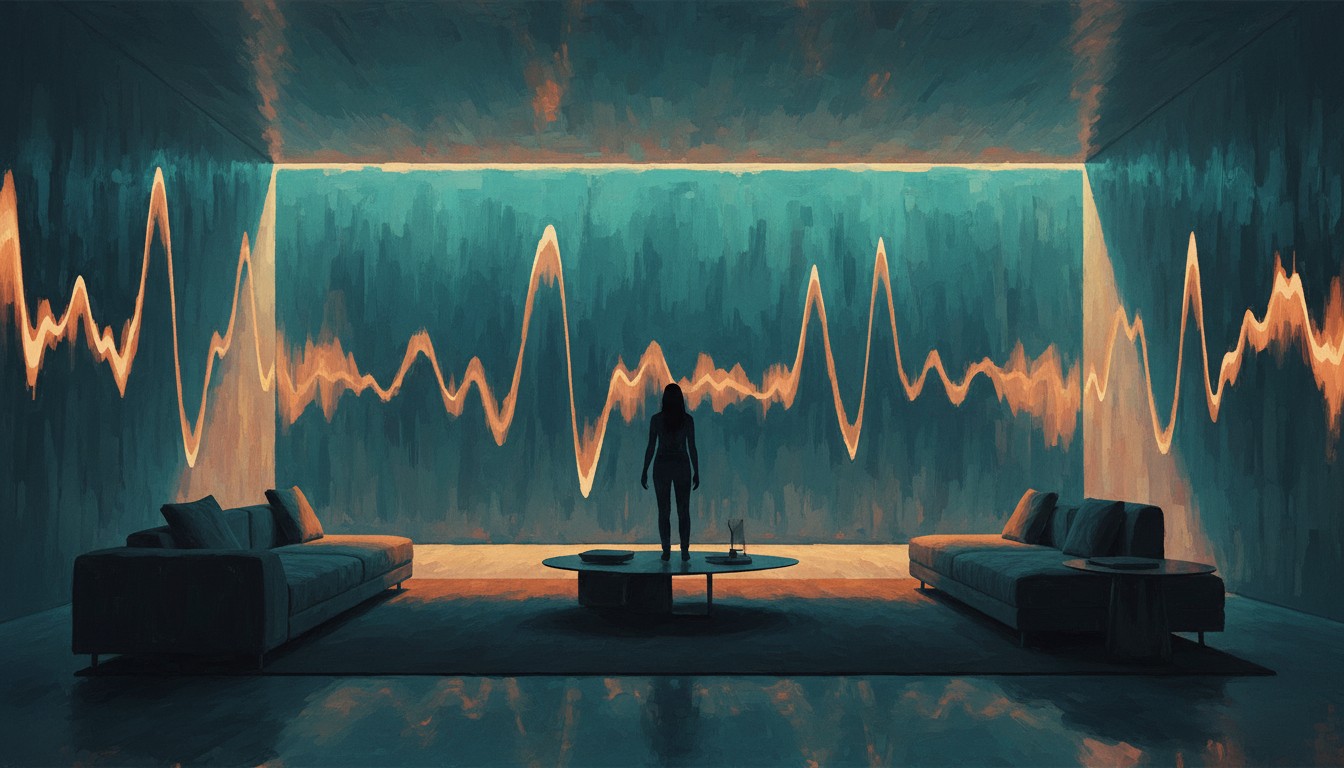
The next surface is architectural. A fitness studio where the intensity of the music tracks the intensity of the class. A hotel lobby whose evening sound is genuinely different from its morning sound — not a different playlist, the same musical identity at a different energy. Retail that scores dwell and flow rather than looping forty minutes of licensed pop. Installations and immersive experiences where the music is an instrument the room itself plays. The technical pieces exist; what the physical world inherits from games is the core idea that music can have states, and transitions between them can be musical rather than crossfades.
The missing layer: songs
Here's the honest gap in almost all of it: adaptive audio so far has meant texture — soundscapes, cues, ambient systems. Powerful, but songless. The harder, more valuable problem is making actual songs adaptive: melody, lyric, a voice, authorship — delivered at whatever energy and style the moment calls for, without dissolving the songwriter's work into generative soup. That requires a format where a song exists as one composition with many faithful realizations, each traceable to its writers (how adaptive songs are produced describes one working approach, and the humanistic case for it the philosophy). Get that right and the adaptive room stops being wallpaper and starts having a soundtrack — one that pays the people who wrote it.