Licensing Basics
Licensing a Song vs. Buying a Beat: What's the Difference?
By the Starchild Music team · September 29, 2026 · 6 min read
The short answer
A beat lease gives you an instrumental to write over — you still have to write the song. A song license gives you a finished, professionally written song — melody, lyrics, structure — to record as your own. Beats suit rappers and toplining writers; song licensing suits artists who want a proven song without writing it. Costs are comparable ($20–$100 range); what differs is what you walk away with.
Search "license music for my release" and you'll land in two very different stores. One sells beats — instrumentals you write your own song over. The other sells songs — finished compositions with melody and lyrics you record as your own. Both are legitimate, both are affordable, and they solve opposite problems. Here's how to tell which one your release actually needs.
What a beat lease gets you
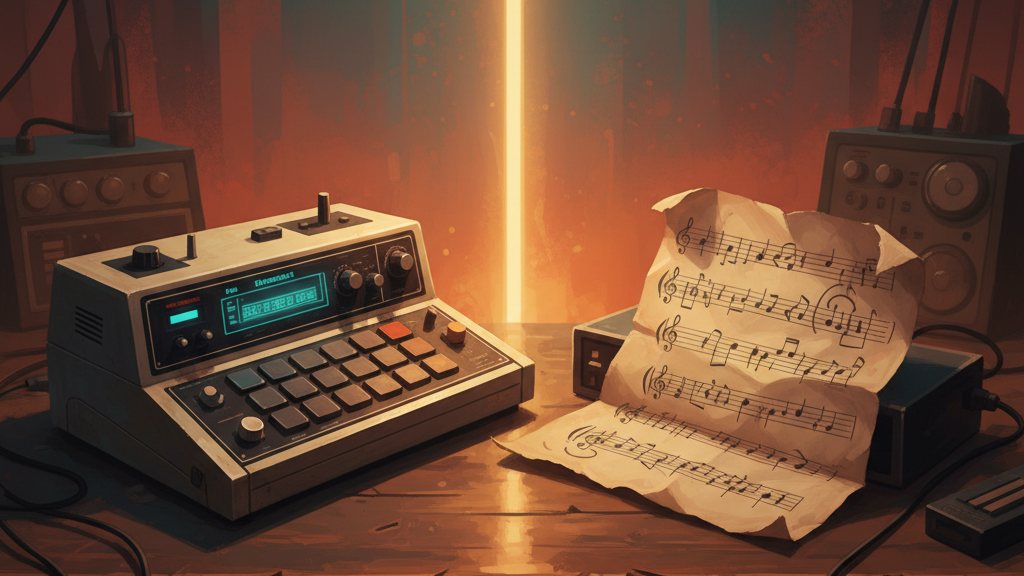
A beat is an instrumental production — drums, chords, arrangement — without a topline. When you lease one (typically $20–$100 for standard leases, more for exclusives), you get the right to write and record your own song over it. The composition that results is partly yours: your melody and lyrics, the producer's underlying track, with terms set by the lease. Beat leases power a huge share of hip-hop and pop — they're the right tool when you're a writer who needs production.
The catch is in the name: a beat is not a song. Everything that makes a listener press repeat — the hook, the story, the melody — is still your job. A beat lease is a starting line.
What a song license gets you
A song license hands you the finished thing: a complete, professionally written song — verses, chorus, bridge, lyrics, melody — that you record and release as your own. On Starchild, licenses start at $30, every song can be auditioned in ~10 different production styles, and packages add instrumentals, personalized productions, or full stems when you want them. The songwriting is already done, by people who write songs for a living.
This is the right tool when your strength is performing, not writing — or when you write but the release calendar doesn't care. Great singers without a great song sit on the shelf; a licensed song is how the shelf empties.
The comparison that matters
- You walk away with: a beat lease → an instrumental (song still to be written). A song license → a finished song ready to record.
- Creative work remaining: beat → all the writing. Song → the performance and production choices.
- Ownership: beat → shared composition (you + producer, per lease terms). Song → the writers keep the composition; your recording is fully yours.
- Cost: comparable at entry ($20–$100). Exclusivity costs more in both worlds.
- Risk: beat → the same beat may appear in many other songs (standard leases are non-exclusive). Song → non-exclusive licenses may have other licensees; exclusive terms remove even that.
How to choose in one question
Ask what's missing from your release. If you have lyrics and melodies pouring out and need production under them — buy the beat. If you have a voice and an audience waiting and the song itself is the missing piece — license the song. Plenty of artists do both across a career; the point is matching the purchase to the gap, not loyalty to one aisle of the store.